

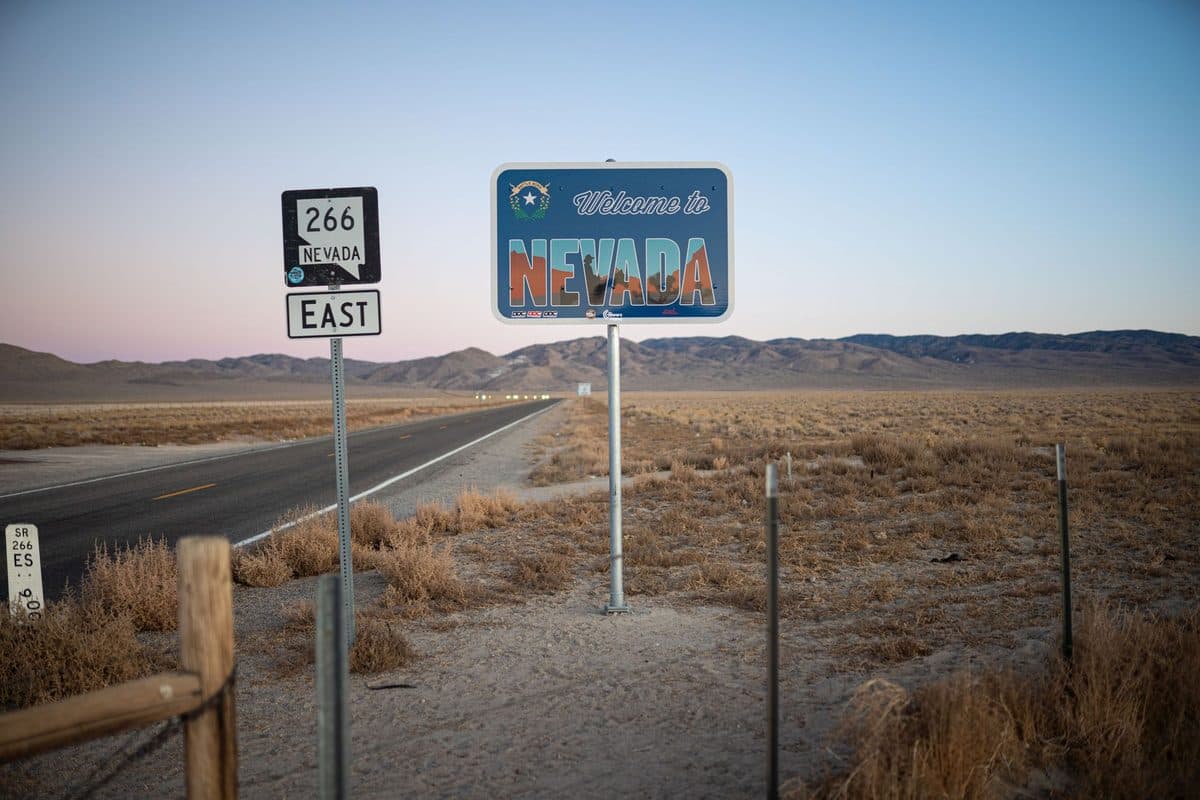
Nevada does not make you wait to become a resident — it makes you move fast. Under NRS 483.245, once you establish residency here you have 30 days to obtain a Nevada driver's license, and your vehicles run on the same clock. There is no minimum number of nights you must sleep here first. What actually takes work is the other half of the job: proving to the state you left that you genuinely left. That is where a declaration of domicile under NRS 41.191, a real Clark County address, and a consistent paper trail matter far more than the DMV appointment. Here is the order to do it in, what each step costs, and the one property-tax form new Las Vegas owners routinely let expire.
The 30-Day DMV Clock Is the Only Hard Deadline
Nevada law is unusually specific here. NRS 483.245(1) requires a person who becomes a Nevada resident to obtain a Nevada driver's license within 30 days. (Source: Nevada Revised Statutes 483.245 · leg.state.nv.us.) NRS 483.141 defines who that applies to — people whose legal residence is in Nevada, and people physically residing and working here — and expressly excludes tourists, out-of-state students, and seasonal residents. The retiree who winters in Henderson and summers in Oregon is not automatically a resident.
Budget for the vehicle side; it catches transplants off guard. NRS 371.040 sets the basic governmental services tax at 4 cents on each $1 of vehicle valuation, and NRS 371.050 fixes that valuation at 35% of the manufacturer's suggested retail price in Nevada, excluding options and extras. (Source: NRS 371.040 and 371.050 · leg.state.nv.us.) Run the math on a $40,000 MSRP vehicle: a $14,000 valuation, and roughly $560 in basic governmental services tax in year one, before registration fees. It steps down annually under the NRS 371.060 schedule, reaching 15% of initial valuation by year nine. Two cars, and you are planning four figures in your first Nevada year.
Residency and Domicile Are Not the Same Thing
Residency is where you are. Domicile is where you intend to stay. For a move to Las Vegas, only the second one carries tax weight.
Here is where most residency guides get it backwards. You will read that you must spend 183 days a year in Nevada to qualify. No Nevada statute conditions your residency on a day count. Nevada does not tax personal income, so it has no revenue reason to audit how many nights you slept in Summerlin. The counting happens in the state you left. California's Franchise Tax Board, for one, weighs time spent in each state alongside a long list of other connections — where your spouse and children live, your principal residence, driver's license and vehicle registration, professional licenses, voter registration, where you bank, where your healthcare providers are, and where your real property sits. (Source: Lobb & Plewe, summarizing California FTB Publication 1031 · read September 2026.)
The practical takeaway is unglamorous: keep a calendar, and make every institutional record — bank, doctor, insurer, employer withholding — point at your Nevada address rather than trailing the move by a year.
File the Declaration of Domicile — in the Right Office
NRS 41.191 lets anyone who has established domicile in Nevada formally evidence it by filing a sworn statement. The detail that trips people up is the venue: the statute requires filing "in the office of the clerk of the district court for the county in which the person resides" — not the county recorder. (Source: NRS 41.191 · nevada.public.law.) In Clark County that means the Eighth Judicial District Court clerk. Plenty of relocation checklists send people to the recorder's office; the statute does not.
The statement must declare that you are a bona fide resident of the state, and it must set out your place of residence, the city, county and state where you formerly resided, and every other place you maintain a residence. If you held onto the house back home, subsection 2 is written for you: it lets a person with more than one residence declare that the Nevada home is their predominant and principal home.
A declaration is sworn, dated evidence of intent — not a shield. It cannot outrun facts that contradict it, which is why the filing and the rest of your paper trail have to agree.
The 3% Property Tax Cap New Owners Forget to Claim
This is the step with real dollars attached, and it appears in almost no residency guide. Under NRS 361.4723, Nevada caps the annual increase on the tax bill of an owner's primary residence at 3%. Every other category — non-owner-occupied homes, land, commercial buildings, business personal property — is capped at up to 8%. (Source: Clark County, NV · clarkcountynv.gov.)
The mechanism is a postcard: the Clark County Assessor mails them to homeowners, new construction, and parcels that may qualify, and you sign and return it. Two things matter for anyone relocating here. First, only one property in the State of Nevada may be selected as your primary residence — the cap and your domicile claim have to agree. Second, when ownership documents are recorded, the owner must complete a new postcard to retain the 3% abatement for the following year. Buyers who just closed in Green Valley or North Las Vegas are exactly who that rule catches — the postcard lands during the busiest month of the move.
What You're Actually Buying Into
The market you are establishing residency in has loosened. Las Vegas REALTORS reported a median price of $480,000 for existing single-family homes sold through its MLS in July 2026 — down 1.0% year over year and 2.0% off the record set in May and June. Inventory has widened too: 7,442 single-family homes were listed without offers, up 4.1% year over year. (Source: Las Vegas REALTORS via Fox5 Vegas · August 2026.) LVR President George Kypreos framed it as steady demand keeping prices near record levels rather than a reversal — and whether that softening continues is the question every relocating buyer is asking.
For retirees the residency and housing questions arrive together, since Nevada's lack of an income tax applies to retirement distributions as much as wages. That is why so many tax-motivated moves land in 55+ communities in Las Vegas, where the primary-residence cap and a single-home domicile line up cleanly.
A workable sequence: close on the home, get the license and registration inside 30 days, register to vote, move your banking and providers, file the declaration of domicile, then return the Assessor's postcard. For the full move mapped against timing and cost, start with our Las Vegas relocation resources.
Frequently Asked Questions
How long does it take to become a Nevada resident? There is no waiting period. Nevada law runs the other direction — once you establish residency, NRS 483.245 gives you 30 days to obtain a Nevada driver's license, and your vehicles are on the same clock. The part that takes longer is documenting the move for the state you left.
Do I have to spend 183 days a year in Nevada? Not under any Nevada statute. Nevada does not tax personal income, so it has no day-count test to enforce. The counting happens in your former state — its revenue agency decides whether you actually left, and time spent in each state is one of the factors it weighs.
Where do I file a declaration of domicile in Las Vegas? NRS 41.191 requires the sworn statement to be filed with the clerk of the district court for the county where you reside — in Clark County, the Eighth Judicial District Court clerk. It is not filed with the county recorder, which is a common mix-up.
What if I keep my house in California after moving to Las Vegas? You can, but it becomes evidence against you if your former state reviews your departure. NRS 41.191 anticipates this: subsection 2 lets someone with more than one residence declare that the Nevada home is their predominant and principal home. Keep the paper trail consistent with that claim.
What is Nevada's 3% property tax cap and how do I claim it? Under NRS 361.4723, the annual increase on the tax bill for an owner's primary residence is capped at 3%, while other property is capped at up to 8%. The Clark County Assessor mails a postcard to parcels that may qualify — you sign it and return it. Buyers who just recorded a deed must submit a new one to keep the 3% cap for the following year.
How much does it cost to register a car in Nevada? The basic governmental services tax is 4 cents per $1 of vehicle valuation, and valuation is set at 35% of the manufacturer's suggested retail price. On a $40,000 MSRP vehicle that works out to roughly $560 in year one, before registration fees, dropping each year on the statutory depreciation schedule.

Frequently Asked Questions
How long does it take to become a Nevada resident?
There is no waiting period. Nevada law runs the other direction — once you establish residency, NRS 483.245 gives you 30 days to obtain a Nevada driver's license, and your vehicles are on the same clock. The part that takes longer is documenting the move for the state you left.
Do I have to spend 183 days a year in Nevada?
Not under any Nevada statute. Nevada does not tax personal income, so it has no day-count test to enforce. The counting happens in your former state — its revenue agency decides whether you actually left, and time spent in each state is one of the factors it weighs.
Where do I file a declaration of domicile in Las Vegas?
NRS 41.191 requires the sworn statement to be filed with the clerk of the district court for the county where you reside — in Clark County, the Eighth Judicial District Court clerk. It is not filed with the county recorder, which is a common mix-up.
What if I keep my house in California after moving to Las Vegas?
You can, but it becomes evidence against you if your former state reviews your departure. NRS 41.191 anticipates this: subsection 2 lets someone with more than one residence declare that the Nevada home is their predominant and principal home. Keep the paper trail consistent with that claim.
What is Nevada's 3% property tax cap and how do I claim it?
Under NRS 361.4723, the annual increase on the tax bill for an owner's primary residence is capped at 3%, while other property is capped at up to 8%. The Clark County Assessor mails a postcard to parcels that may qualify — you sign it and return it. Buyers who just recorded a deed must submit a new one to keep the 3% cap for the following year.
How much does it cost to register a car in Nevada?
The basic governmental services tax is 4 cents per $1 of vehicle valuation, and valuation is set at 35% of the manufacturer's suggested retail price. On a $40,000 MSRP vehicle that works out to roughly $560 in year one, before registration fees, dropping each year on the statutory depreciation schedule.
Moving to Las Vegas?
Tell us where you're coming from and roughly when. We'll send a plan for your timeline — which areas to look at, what it actually costs, and what to handle first.