

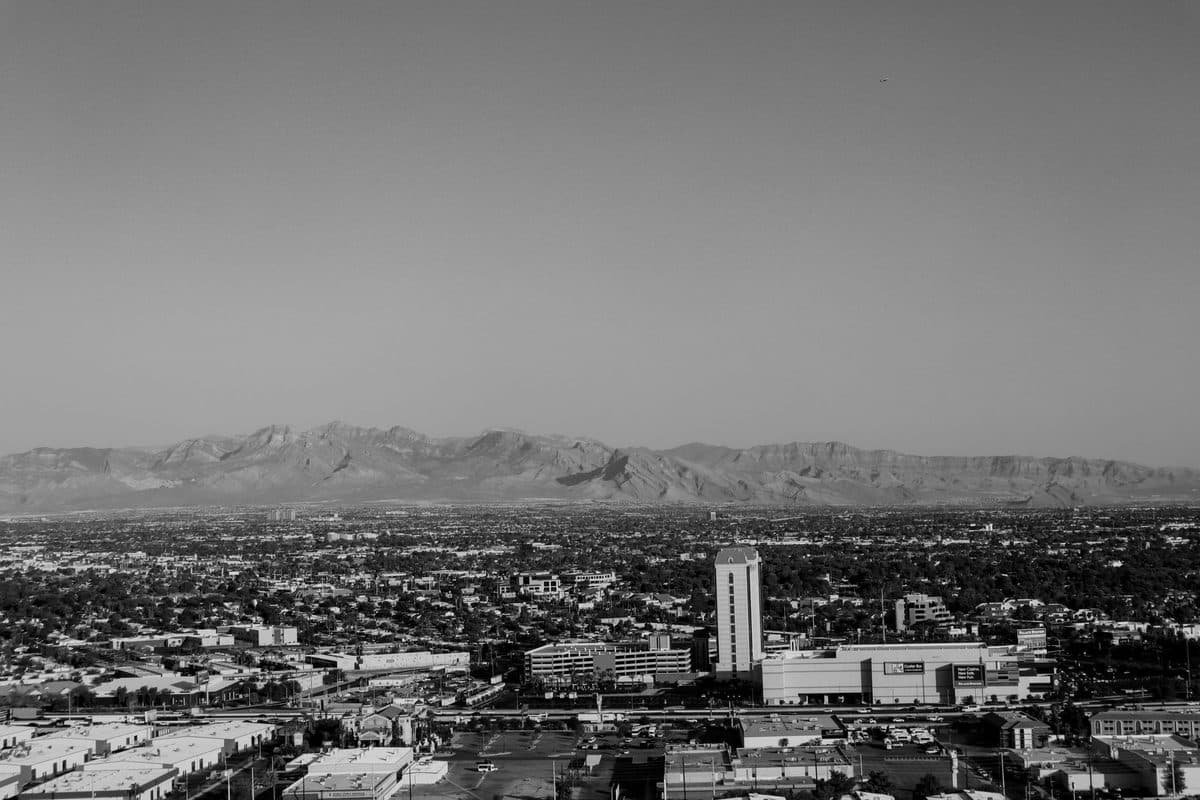
Las Vegas is one of the fastest-growing metros in the country, and it's not slowing down. Clark County's population hit 2.4 million in 2026, growing at roughly 1.6% annually — the fastest rate projected through 2029 (Source: CBER/UNLV 2025 Population Forecast). Combine zero state income tax, a diversifying job market, and a valley-wide median home price of $478,000 (Source: GLVAR MLS · July 2026), and it's clear why roughly 50,000 new residents arrived last year alone. This guide covers what you actually need to know before making the move — costs, neighborhoods, jobs, schools, and a phased timeline to get settled.
What Does It Cost to Live in Las Vegas?
Las Vegas runs about 2–3% above the national cost-of-living average, but the no-income-tax advantage often more than offsets it. Here's a realistic monthly budget:
- Housing: Median home price $478,000 valley-wide; rents average $1,300–$1,500 for a one-bedroom (Source: GLVAR MLS · July 2026)
- Utilities: $150–$200/month in winter, $250–$450/month in summer when AC runs nonstop (Source: NV Energy residential averages)
- Groceries: Roughly in line with national averages — about $400–$600/month for a family of four
- Sales tax: 8.375% in Clark County
- Property tax: ~0.53% effective rate — significantly lower than California's ~0.71% (Source: Clark County Assessor 2026)
A single person can live comfortably on $55,000–$70,000 per year. A family of four typically needs $65,000–$85,000 (Source: NREG Cost of Living Analysis · 2026).
The No-Income-Tax Advantage
This is the single biggest financial reason people relocate to Nevada. There's no state income tax, no corporate income tax, no estate tax, and no inheritance tax.
The savings add up fast:
| Household Income | Annual State Tax Savings vs. California |
|---|---|
| $75,000 | ~$2,800 |
| $100,000 | ~$4,200 |
| $150,000 | ~$9,400 |
| $250,000 | ~$22,500 |
(Source: CountryTaxCalc · 2026 verified brackets)
Over a decade, a household earning $150,000 keeps roughly $94,000 more in Nevada than in California — before factoring in lower property taxes and housing costs. That's a down payment.
Las Vegas Neighborhoods by Budget
The Las Vegas Valley spans over 600 square miles, and neighborhoods vary dramatically in price, vibe, and lifestyle. Here's a tier framework based on July 2026 median prices:
Entry tier ($400K–$450K): North Las Vegas ($425,000 median) offers the lowest entry point with newer construction in master-planned communities like Aliante and Tule Springs. Centennial Hills ($439,500) delivers better schools and proximity to the 215 Beltway.
Mid-range ($450K–$530K): Green Valley in Henderson ($485,000) is a mature, family-friendly area with established schools and walkable retail along Green Valley Parkway. Mountain's Edge ($520,000) in the southwest continues to expand with new builders and easy freeway access to the Strip corridor.
Premium ($530K–$650K+): Henderson's Anthem and Inspirada ($552,000–$592,000) deliver top-rated schools, resort-style amenities, and strong resale value. Summerlin ($649,000) remains the valley's flagship master-planned community — Red Rock Canyon access, Downtown Summerlin shopping, and 150+ miles of trails.
(Source: GLVAR MLS via NREG · July 2026)
If you're relocating from a specific state, we've built detailed guides: moving from California, from Texas, from the Pacific Northwest, and from Utah. Each covers tax comparisons, housing gap analysis, and submarket recommendations tailored to your origin state.
Jobs Beyond the Strip
Las Vegas has quietly diversified. Tourism and hospitality still drive the economy — MGM Resorts, Caesars Entertainment, and Wynn Resorts remain major employers — but gaming's share of the workforce has fallen below 22% (Source: LVGEA 2026 State of Economic Development).
The metro added 28,400 jobs over the past year, a 2.6% growth rate that led the nation compared to 1.4% nationally. Unemployment sits at approximately 5.1% (Source: BLS / LVGEA Spring 2026). Sectors fueling growth:
- Healthcare: Intermountain Health, HCA, and the new UNLV School of Medicine are expanding hiring across clinical and administrative roles
- Logistics and distribution: Amazon, FedEx, and dozens of third-party logistics operators run massive fulfillment operations along the I-15 and I-215 corridors in North Las Vegas and the southwest
- Technology and data centers: Switch operates one of the world's largest data center campuses at the Apex Industrial Park. Novva Data Centers bought 205 acres nearby for a planned 275,000 SF / 100MW facility
- Construction: The Athletics' planned ballpark on the former Tropicana site, continued residential build-out in Skye Canyon, Cadence, and Inspirada, and infrastructure projects (I-11, Reid Airport expansion) are sustaining construction employment
- Remote work: Nevada's zero income tax makes it attractive for remote workers employed by out-of-state companies — you keep more of your paycheck without changing jobs
Schools and Education
The Clark County School District (CCSD) is the 5th-largest in the country with over 300,000 students. Quality varies significantly by zone, and your neighborhood choice directly determines your school options.
Strongest public school zones:
- Summerlin (89135/89138): Palo Verde HS, Arbor View HS, and several A-rated elementaries
- Henderson Green Valley and Anthem (89052/89074): Coronado HS, Liberty HS — consistently among the valley's top performers
- Centennial Hills (89149): Centennial HS, Shadow Ridge HS — strong and improving
Charter and private alternatives: Pinecrest Academy (ranked #1 charter in Nevada), Doral Academy, The Meadows School (private, K–12), and Bishop Gorman HS (private) give families options beyond the traditional district.
If schools are a top priority, choose your neighborhood before your house — the school zone should drive the search, not the other way around.
Healthcare in the Valley
Las Vegas has expanded its healthcare infrastructure significantly. Major hospital systems include:
- Intermountain Health (formerly Southwest Medical) — the valley's largest provider network with 30+ locations
- HCA Healthcare — operates Sunrise Hospital, MountainView, and Southern Hills
- Dignity Health — St. Rose Dominican hospitals across Henderson and the southwest
- VA Southern Nevada Healthcare System — for veterans near Nellis AFB and across the valley
The 2022 opening of the UNLV School of Medicine is beginning to address the region's physician shortage, and specialty care has improved considerably. That said, wait times for specialists can still run longer than in larger coastal metros — something to factor in if you have ongoing medical needs.
Your 30-60-90 Day Move Plan
Days 1–30 (Before you arrive):
- Research neighborhoods using the budget tiers above — visit in person if possible
- Get pre-approved for a mortgage (or scout rentals if you plan to rent first)
- Hire movers: West Coast moves average $16,700–$30,100; East Coast runs $20,200–$35,100 (Source: NREG Relocation Analysis · 2026)
- Schedule utility transfers (NV Energy for electric, Southwest Gas, Las Vegas Valley Water District)
- If you have kids, research school zones and start enrollment paperwork with CCSD
Days 31–60 (First month in Las Vegas):
- Visit the Nevada DMV within 30 days to get your NV driver's license (bring proof of identity, residency, and Social Security)
- Register your vehicle(s) — Nevada registration and smog check required
- Update your voter registration at the Clark County Election Department
- Open a local bank account if needed (Nevada State Bank, One Nevada Credit Union)
- Set up your homestead exemption with the Clark County Assessor — this caps your property tax increases
Days 61–90 (Getting settled):
- Explore your neighborhood — find your grocery store, gym, pharmacy, and urgent care
- Meet your HOA (if applicable) and review CC&Rs carefully — most master-planned communities have them
- File your change of address with the USPS and update insurance policies
- If you're a remote worker, confirm your employer has updated your tax withholding to reflect Nevada residency (this is where you start saving)
- Connect with a local real estate advisor to discuss long-term plans — whether you rented first and want to buy, or you're already in and thinking about investment property
What Newcomers Get Wrong
"It's just the Strip." Most residents never go to the Strip. Las Vegas is a sprawling metro of 2.4 million people with hiking at Red Rock Canyon, boating at Lake Mead, skiing at Mt. Charleston, and 300+ days of sunshine. The neighborhoods feel like any other western suburban metro — except with better entertainment options.
"Summer is unbearable." Summer is hot, yes — 105°F to 115°F from June through September. But it's dry heat (humidity typically under 15%), homes are built for it, and most socializing shifts to mornings and evenings. Budget $250–$450/month for summer AC, and you'll be fine.
"Schools are terrible." CCSD struggles with overall rankings, but individual school zones in Summerlin, Henderson, and Centennial Hills consistently perform well. Zone matters more than district averages.
Frequently Asked Questions
How much does it cost to live in Las Vegas in 2026? A single person can live comfortably on $55,000–$70,000 per year. A family of four typically needs $65,000–$85,000. The valley-wide median home price is $478,000, and average rents for a one-bedroom run $1,300–$1,500 per month.
Is Las Vegas a good place to raise a family? Yes — especially in master-planned communities like Summerlin, Henderson's Green Valley and Anthem, and Centennial Hills. These areas offer top-rated schools, parks, low crime, and family-friendly amenities.
How much do you save with no state income tax in Nevada? A household earning $100,000 saves roughly $4,200 per year compared to California. At $250,000, savings jump to about $22,500 annually. Nevada also has no corporate income tax, estate tax, or inheritance tax.
What is the best time of year to move to Las Vegas? March through May and October through early December. Summer highs of 105–115°F drive moving costs up 25–40% and make the physical move harder.
What are the most affordable neighborhoods in Las Vegas? North Las Vegas offers the lowest entry point with a median around $425,000. Centennial Hills ($439,500) and Mountain's Edge ($520,000) also offer strong value.
Do I need a car in Las Vegas? Yes. Las Vegas is a car-dependent city. Public transit exists (RTC buses and a monorail on the Strip), but daily life — commuting, groceries, kids' activities — requires a vehicle. Plan for one car per driving adult.
Frequently Asked Questions
How much does it cost to live in Las Vegas in 2026?
A single person can live comfortably on $55,000–$70,000 per year. A family of four typically needs $65,000–$85,000. The valley-wide median home price is $478,000, and average rents for a one-bedroom apartment run $1,300–$1,500 per month.
Is Las Vegas a good place to raise a family?
Yes — especially in master-planned communities like Summerlin, Henderson's Green Valley and Anthem, and Centennial Hills. These areas offer top-rated schools, parks, low crime, and family-friendly amenities. CCSD is the 5th-largest district in the U.S. with 300,000+ students.
How much do you save with no state income tax in Nevada?
A household earning $100,000 saves roughly $4,200 per year compared to California. At $250,000, savings jump to about $22,500 annually. Nevada also has no corporate income tax, estate tax, or inheritance tax.
What is the best time of year to move to Las Vegas?
March through May and October through early December are ideal. Summer highs of 105–115°F drive moving costs up 25–40% and make the physical move harder. Winter months are mild and pleasant.
What are the most affordable neighborhoods in Las Vegas?
North Las Vegas offers the lowest entry point with a median around $425,000. Centennial Hills ($439,500) and the southwest Las Vegas corridor around Mountain's Edge ($520,000) also offer strong value relative to Summerlin and Henderson.
Moving to Las Vegas?
Tell us where you're coming from and roughly when. We'll send a plan for your timeline — which areas to look at, what it actually costs, and what to handle first.