

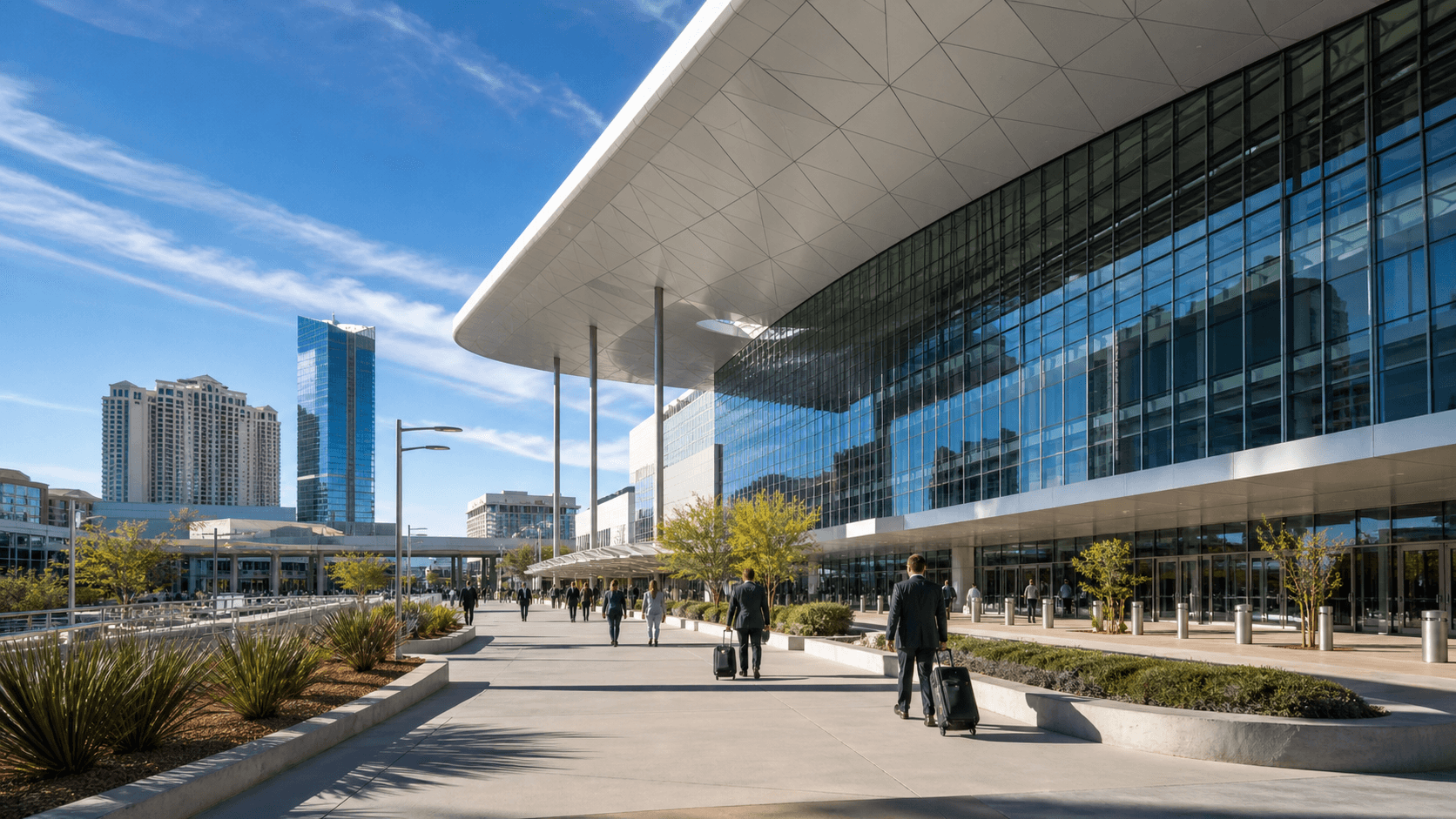
Las Vegas is famous for entertainment, but conventions are one of the engines that keep the city moving.
That is why the completion of the Las Vegas Convention Center's $600 million renovation matters far beyond the convention halls themselves. It affects tourism, hotel performance, restaurants, retail centers, transportation, employment, and real estate demand throughout the valley.
For buyers, sellers, investors, and business owners, the renovated Las Vegas Convention Center is not just a civic improvement. It is a signal about where Las Vegas is heading.
The Convention Center Is One Of Las Vegas' Most Important Economic Assets
The Las Vegas Convention Center is operated by the Las Vegas Convention and Visitors Authority, and it plays a central role in the city's business travel economy.
The completed renovation modernized the legacy campus and brought the facility to approximately 4.6 million square feet, including about 2.5 million square feet of exhibit space, according to LVCVA information released around the completion of the project.
That scale matters.
Large conventions bring visitors who often spend money on hotels, restaurants, rideshare and transit, retail shopping, entertainment, and local services. Unlike some leisure visitors, convention travelers often come midweek. That helps support hotel occupancy, restaurant traffic, and retail spending during periods that might otherwise be softer.
Why The $600M Renovation Matters Now
Las Vegas is competing with other major convention cities, including Orlando, Chicago, Dallas, Houston, Atlanta, and Anaheim.
Convention organizers care about more than square footage. They care about modern design, efficient movement, flexible space, technology, food and beverage, transportation, nearby hotel inventory, and the overall visitor experience.
The renovation helps Las Vegas protect its position as one of the country's most important meeting and event destinations.
That has a direct connection to real estate because visitor demand supports the broader local economy. When convention business is healthy, it helps sustain resort corridor employment, hospitality real estate, retail leasing, restaurant demand, local tax revenue, and investor confidence.
Real estate is not only about houses. It is about the economic base underneath those houses.
How Convention Demand Supports The Housing Market
The connection between conventions and residential real estate may not be obvious at first, but it is real.
Conventions support hospitality jobs, management jobs, food and beverage jobs, construction work, event production, logistics, marketing, security, cleaning services, transportation, and professional services.
Those jobs support households. Households support housing demand.
In a city like Las Vegas, where tourism and business travel remain major employment drivers, a stronger convention platform can help stabilize the local economy. That matters for homeowners, buyers, and investors because employment is one of the foundations of housing demand.
If Las Vegas can continue attracting major shows and corporate events, it gives the valley another reason to remain relevant even when leisure travel softens. For context on the broader 2026 Las Vegas housing market, see our market update.
What It Means For Nearby Neighborhoods
The Convention Center sits near the Resort Corridor, the Arts District, Downtown Las Vegas, Paradise Road, the Medical District, and central valley neighborhoods.
Nearby real estate may benefit in different ways:
- Hotels may benefit from stronger convention demand
- Restaurants and retail may gain from increased visitor traffic
- Office and flex users may benefit from proximity to events and hospitality
- Residential areas may benefit from employment stability
- Investors may watch for redevelopment and infill opportunities
Not every nearby property automatically increases in value because of the renovation. Real estate still depends on condition, zoning, access, parking, tenant demand, and neighborhood quality.
But major infrastructure improvements can change how investors and businesses view an area over time.
Retail And Restaurants May Be Some Of The Biggest Winners
Convention visitors spend differently than everyday local shoppers.
They often eat out, attend hosted events, visit bars, shop between meetings, and use nearby services. This can help support restaurants and retailers near the Resort Corridor and convention zones.
For retail landlords and tenants, the important questions are whether the location is accessible from hotels and convention venues, whether it serves both locals and visitors, and whether it can capture midweek traffic.
Las Vegas retail has already shown resilience in recent market reports, with low vacancy in many parts of the valley. The Convention Center renovation adds another demand driver for retail that can serve convention traffic.
The Transportation Piece Is Critical
A bigger and better convention center still depends on movement.
Visitors need to get from the airport to hotels, from hotels to the convention center, and from events to restaurants and entertainment. That is why the future of Vegas Loop, the Monorail, rideshare systems, pedestrian improvements, and airport connections matters.
Transportation friction can limit the impact of major development. Better connections can multiply it.
For real estate, properties with easier access to major employment and tourism nodes can become more attractive. This is especially true for hotels, retail, multifamily, and mixed-use properties near key routes.
What Investors Should Watch
Investors should avoid simplistic thinking. The smarter question is: which assets are positioned to benefit from stronger convention activity?
Potential winners may include well-located hotels, retail centers serving both locals and visitors, restaurants near high-traffic corridors, multifamily properties near employment centers, infill redevelopment sites, and mixed-use opportunities near improving transportation links.
Potential risks include overpaying based on hype, underestimating renovation costs, buying properties with poor access or weak parking, and assuming convention growth fixes a bad asset.
Las Vegas rewards smart location decisions, but it punishes lazy underwriting.
For a deeper look at commercial real estate trends, explore our commercial resources or contact us to discuss a specific investment thesis.
What Homeowners Should Take From This
For homeowners, the Convention Center renovation is part of the bigger Las Vegas story.
The city continues to reinvest in the infrastructure that supports tourism, conventions, sports, entertainment, and business travel. That helps keep the local economy diversified within the broader visitor economy.
These projects do not determine your home's value by themselves. But they are part of the backdrop buyers consider when choosing Las Vegas. That is especially relevant given the other major projects underway — including the A's ballpark and Bally's resort at the former Tropicana site.
What Buyers Should Take From This
For buyers, the renovation is another reminder that Las Vegas is still building for the future.
When evaluating where to buy, consider not only the home but also the larger economic map:
- Where are the job centers?
- Where is transportation improving?
- Where are major projects being completed?
- Which neighborhoods are connected to long-term growth?
- Which areas offer value without sacrificing access?
In Las Vegas, location is not just about distance to the Strip. It is about access to the places and industries that keep the valley moving. Browse communities to see how different areas of the valley fit your goals.
The Bottom Line
The Las Vegas Convention Center renovation strengthens one of the city's most important economic pillars.
It supports the visitor economy, helps Las Vegas compete for major events, and creates ripple effects across hotels, retail, restaurants, transportation, jobs, and real estate.
For anyone watching the Las Vegas real estate market in 2026, this is one of the major projects worth understanding.
Sources And Further Reading
- Las Vegas Convention and Visitors Authority, "Las Vegas Convention Center Completes $600 Million Renovation, Welcomes CES 2026"
- KNPR, "The Las Vegas Convention Center's expansion and renovation has been open for nearly six months. How's business?"
- Skift Meetings, "CES 2026 Debuts the Las Vegas Convention Center's $600 Million Renovation"
- LVCVA Executive Summary of Southern Nevada Tourism Indicators

Frequently Asked Questions
How big is the renovated Las Vegas Convention Center?
The completed renovation brought the facility to approximately 4.6 million square feet, including about 2.5 million square feet of exhibit space, making it one of the largest convention facilities in the United States.
How does the Convention Center renovation affect residential real estate?
Conventions support hospitality jobs, food and beverage employment, logistics, and professional services. Those jobs support households, and households support housing demand. A stronger convention platform helps stabilize the broader local economy.
Which neighborhoods are closest to the Las Vegas Convention Center?
The Convention Center sits near the Resort Corridor, the Arts District, Downtown Las Vegas, Paradise Road, and the Medical District. Nearby real estate may benefit from employment activity and visitor traffic.
Is Las Vegas commercial real estate a good investment in 2026?
The combination of a growing convention economy, new sports and entertainment infrastructure, and sustained population growth creates a compelling backdrop for well-located commercial real estate. Smart location decisions and realistic underwriting still matter.
What other major Las Vegas development projects should investors watch?
Key projects include the A's ballpark and Bally's resort at the former Tropicana site, the Brightline West terminal, expanded resort development along the Strip, and ongoing North Las Vegas industrial growth.
Want the Las Vegas market read each month?
Pricing, inventory, and what's actually moving — written by brokers working the market, not recycled national headlines. Tell us which side you care about.