

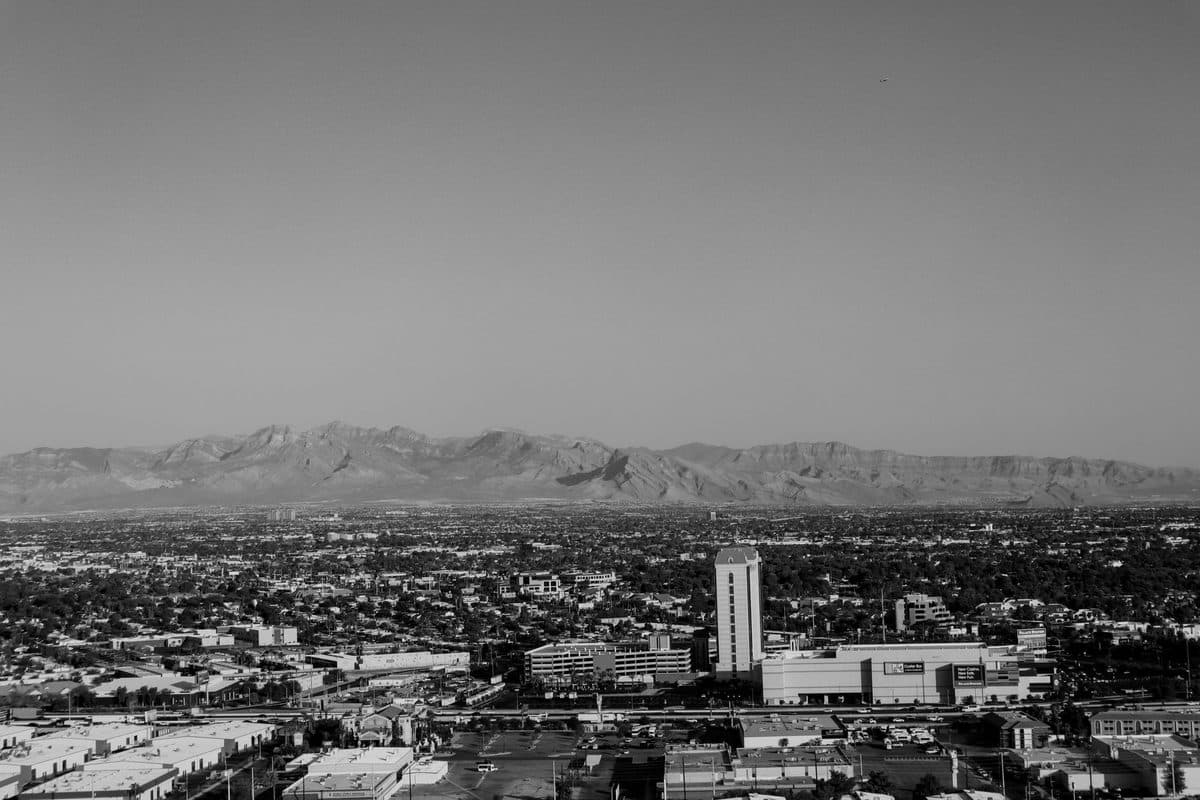
Anyone handing you a specific Las Vegas home price for 2030 is guessing. Five-year metro forecasts have no track record worth trusting, and the algorithmic sites ranking for this question right now publish figures that disagree with each other by tens of thousands of dollars. What is knowable are the four structural clocks already running, each with a date attached: how many people Clark County adds by 2030, how much developable dirt is left, what the new Colorado River rules allow, and which major projects open before the decade turns. Those four determine the range prices move inside. Las Vegas starts that run from a $475,000 single-family median, down 1.0% year over year (Source: Las Vegas REALTORS via Nevada Business Magazine, September 8, 2026).
The 2030 Starting Line: Where Las Vegas Actually Is Today
Most of the five-year outlooks ranking for this question were written in 2024 and still anchor to a median in the low $420,000s. That number is stale by roughly 13%, which makes every projection built on top of it wrong from the first line.
Here is the real starting line. In August 2026, the median price of an existing single-family home sold through the MLS in Southern Nevada was $475,000, down 1.0% from a year earlier and off the all-time high of $490,000 set in May and June 2026. Condos and townhomes ran $299,900, up 0.6%. A total of 2,252 existing homes, condos and townhomes changed hands. Inventory kept building — 7,590 single-family homes listed without an offer, up 5.3% year over year, and 2,714 condos and townhomes, up 6.0% — leaving just over 4.5 months of supply. Cash accounted for 21.9% of sales and distressed sales for 1.0% (Source: Las Vegas REALTORS via Nevada Business Magazine, September 8, 2026).
"Local home prices have been pretty stable this year — and really for the past two years or so," LVR president George Kypreos said in that report. That stability is the platform 2030 gets built on. For the nearer-term view, our 2027 Las Vegas housing market forecast covers the next twelve months in detail, and the July 2026 price data explains why the valley is drifting down rather than falling.
Clock One: Clark County Adds About 146,000 People by 2030
The Nevada State Demographer publishes 20-year county projections every October under NRS 360.289, built on the REMI model and anchored to the Governor's certified population estimates. The current edition puts Clark County at 2,538,955 residents in 2030, up from 2,392,490 in 2024 — about 146,000 additional people over six years, or roughly 24,000 a year (Source: Nevada County Population Projections 2025 to 2044, Nevada State Demographer).
That is real demand and it is also a marked deceleration from the pace that built Summerlin and Henderson. At roughly 2.5 people per household, 146,000 residents implies somewhere near 58,000 additional housing units needed by 2030.
The report names its own risks, and one of them is the whole story for housing: "Limited housing stock in some counties may constrain population growth relative to the projections." Read that carefully — the demographer is saying the population forecast itself depends on whether enough homes get built. Growth and supply are not independent variables here.
The composition matters as much as the count. Migration into Southern Nevada skews older, which loads the demand onto single-story product and the valley's 55+ communities in Las Vegas rather than spreading it evenly across the price stack.
Clock Two: The Valley Is Running Out of Dirt — and Just Bought More
Nevada's constraint has never been demand. It is land, and specifically federal land. The BLM controls 67% of Nevada, and Southern Nevada has roughly 23,000 acres left for development inside municipal boundaries and previously identified land bills (Source: Nevada Business Magazine, June 1, 2026).
Those acres come to market in lumps, not a steady stream, which is why the supply side of a 2030 forecast is so hard to model. Six days ago the biggest lump in years landed: on September 10, 2026, the BLM finalized the sale of nearly 940 acres to the City of Las Vegas for $94 million under the Southern Nevada Public Land Management Act, designated for a master-planned community of up to 6,000 homes (Source: Bureau of Land Management, September 2026). Of the proceeds, 85% funds Nevada parks, trails and wildfire resilience, 5% goes to state education, and 10% goes to the Southern Nevada Water Authority.
Hold that 6,000 against the roughly 58,000 units the population math implies, and the shape of 2030 gets clear. A single large disposal — the largest in years — covers about a tenth of the need, and homes on that dirt will not deliver until the back half of the decade. Entitlement and horizontal construction on raw desert run years, not months. The same squeeze is why finished lots in Skye Canyon and Cadence get scarcer as those master plans build out rather than cheaper.
Clock Three: The Water Rules Were Rewritten Three Weeks Ago
The single most under-covered 2030 variable in Las Vegas real estate is not rates. It is the Colorado River rulebook, and it changed last month.
The 2007 Interim Guidelines governing Lake Powell and Lake Mead, the 2019 Drought Contingency Plans, and the related U.S.–Mexico agreements all expired at the end of 2026. Reclamation released its Final EIS on July 31, 2026 and issued the Record of Decision on August 21, 2026, adopting a "Decision Framework" covering operations for 2027–2036. Consensus on long-term operations was not reached among the basin states; instead, the framework sets principles and thresholds, and the actual operating guidelines are issued in two-year increments — the 2027–2028 guidelines came out alongside the ROD (Source: U.S. Bureau of Reclamation, August 2026).
For housing, the mechanism is not "the taps run dry." It is planning certainty. Southern Nevada's water resource plans, and the development approvals that lean on them, now sit on top of rules confirmed two years at a time through 2036 instead of a single set fixed for a decade. That pushes risk onto builders and master-plan developers at exactly the moment the valley needs them building. It is a supply-side constraint, and constrained supply against 146,000 new residents is a price-supportive combination, not a bearish one.
Clock Four: Two Openings That Land Before 2030
Demand-side, two projects with hard dates arrive inside this window.
The Athletics' ballpark at the southeast corner of Las Vegas Boulevard and Tropicana Avenue is a $2 billion build targeting February 29, 2028. About $400 million had been spent as of May 2026, with the lower bowl substantially underway and the project reported on time and on budget (Source: Ballpark Digest, May 23, 2026). A second major-league franchise reshapes the resort corridor's employment base and the rental demand around it.
Brightline West is the bigger structural change. The 218-mile high-speed line runs in the median of Interstate 15 from Las Vegas to Victorville, California, at an estimated cost of at least $12 billion. It is now tracking to late 2029, with the Las Vegas station taking shape off I-15 near the 215 (Source: FOX5 Vegas, January 13, 2026). A fixed-rail link to the Southern California basin changes the calculus for weekend-home buyers and for anyone who has been weighing a Las Vegas purchase against a California commute — and it lands at the very edge of this forecast window, meaning most of its housing effect shows up after 2030, not before.
So What Actually Happens to Prices by 2030?
Arithmetic, clearly labeled as arithmetic. Start from the verified $475,000 August 2026 median and compound it forward four years:
- 1% a year → roughly $494,000 in 2030
- 2% a year → roughly $514,000
- 3% a year → roughly $535,000
Those are not forecasts. They are what the current median becomes under three growth assumptions, before inflation — and in real terms, anything under about 2.5% a year is a decline in purchasing-power dollars even while the sticker price rises.
What would break the low end: rates staying in the sevens long enough to stall household formation, or a resort-economy recession that hits Clark County employment. What would break the high end: land releases accelerating well past the September pace, or a rate move into the fives pulling four years of sidelined demand into a 4.5-month supply at once.
The scenario the data actually supports is neither. It is a valley that adds people steadily but slower than it used to, cannot build fast enough to meet them because the dirt and the water rules both throttle supply, and therefore grinds upward in low single digits with the softness concentrated where builders still compete. Track the monthly numbers on our Las Vegas market insights page as those clocks run.
Frequently Asked Questions
What will Las Vegas home prices be in 2030? No forecaster publishes a credible metro-level dollar figure five years out, and the algorithmic sites that do disagree with each other by tens of thousands of dollars on the same query. What is knowable is the starting line and the arithmetic: the August 2026 single-family median was $475,000 (Source: Las Vegas REALTORS via Nevada Business Magazine, September 8, 2026). Compounded forward four years, 1% annual growth puts that near $494,000, 2% near $514,000 and 3% near $535,000 — before inflation. That range, not a single number, is the honest answer.
Will Clark County keep growing through 2030? Yes, but more slowly than the 2010s. The Nevada State Demographer projects Clark County at 2,538,955 residents in 2030, up from 2,392,490 in 2024 — about 146,000 additional people over six years (Source: Nevada County Population Projections 2025 to 2044, Nevada State Demographer, published under NRS 360.289). That is roughly 24,000 per year, well under the valley's boom-era pace.
Is Las Vegas running out of land to build on? It is running short, not out. The Bureau of Land Management controls 67% of Nevada, and Southern Nevada has roughly 23,000 acres left for development inside municipal boundaries and previously identified land bills (Source: Nevada Business Magazine, June 1, 2026). Releases are lumpy: on September 10, 2026 the BLM finalized a sale of nearly 940 acres to the City of Las Vegas for $94 million, enough for a master-planned community of up to 6,000 homes (Source: Bureau of Land Management, September 2026).
Will water shortages stop Las Vegas from building homes by 2030? The rules that govern the answer were just rewritten. Reclamation issued its Record of Decision on August 21, 2026, adopting a Decision Framework covering Colorado River operations for 2027–2036, with the first operating guidelines issued for 2027–2028 in two-year increments (Source: U.S. Bureau of Reclamation, August 2026). The 2007 Interim Guidelines and 2019 Drought Contingency Plans expired at the end of 2026. Shorter guideline windows mean less long-range certainty for developers, which is a constraint on supply rather than an outright stop.
Which Las Vegas projects will actually be open before 2030? Two big ones. The Athletics' $2 billion ballpark at Las Vegas Boulevard and Tropicana is targeting February 29, 2028, with about $400 million spent as of May 2026 and construction reported on time and on budget (Source: Ballpark Digest, May 23, 2026). Brightline West, the 218-mile high-speed line running in the Interstate 15 median from Las Vegas to Victorville, is now tracking to late 2029 at an estimated cost of at least $12 billion (Source: FOX5 Vegas, January 13, 2026).
Is a Las Vegas housing crash likely before 2030? Nothing currently in the data builds one. Crashes need distressed supply and collapsing demand; distressed sales were 1.0% of August 2026 transactions and the valley held just over 4.5 months of supply (Source: Las Vegas REALTORS via Nevada Business Magazine, September 8, 2026). The realistic bear case for 2030 is a long flat stretch where prices stall while incomes catch up — not a 2008 repeat.
Frequently Asked Questions
What will Las Vegas home prices be in 2030?
No forecaster publishes a credible metro-level dollar figure five years out, and the algorithmic sites that do disagree with each other by tens of thousands of dollars on the same query. What is knowable is the starting line and the arithmetic: the August 2026 single-family median was $475,000 (Source: Las Vegas REALTORS via Nevada Business Magazine, September 8, 2026). Compounded forward four years, 1% annual growth puts that near $494,000, 2% near $514,000 and 3% near $535,000 — before inflation. That range, not a single number, is the honest answer.
Will Clark County keep growing through 2030?
Yes, but more slowly than the 2010s. The Nevada State Demographer projects Clark County at 2,538,955 residents in 2030, up from 2,392,490 in 2024 — about 146,000 additional people over six years (Source: Nevada County Population Projections 2025 to 2044, Nevada State Demographer, published under NRS 360.289). That is roughly 24,000 per year, well under the valley's boom-era pace.
Is Las Vegas running out of land to build on?
It is running short, not out. The Bureau of Land Management controls 67% of Nevada, and Southern Nevada has roughly 23,000 acres left for development inside municipal boundaries and previously identified land bills (Source: Nevada Business Magazine, June 1, 2026). Releases are lumpy: on September 10, 2026 the BLM finalized a sale of nearly 940 acres to the City of Las Vegas for $94 million, enough for a master-planned community of up to 6,000 homes (Source: Bureau of Land Management, September 2026).
Will water shortages stop Las Vegas from building homes by 2030?
The rules that govern the answer were just rewritten. Reclamation issued its Record of Decision on August 21, 2026, adopting a Decision Framework covering Colorado River operations for 2027–2036, with the first operating guidelines issued for 2027–2028 in two-year increments (Source: U.S. Bureau of Reclamation, August 2026). The 2007 Interim Guidelines and 2019 Drought Contingency Plans expired at the end of 2026. Shorter guideline windows mean less long-range certainty for developers, which is a constraint on supply rather than an outright stop.
Which Las Vegas projects will actually be open before 2030?
Two big ones. The Athletics' $2 billion ballpark at Las Vegas Boulevard and Tropicana is targeting February 29, 2028, with about $400 million spent as of May 2026 and construction reported on time and on budget (Source: Ballpark Digest, May 23, 2026). Brightline West, the 218-mile high-speed line running in the Interstate 15 median from Las Vegas to Victorville, is now tracking to late 2029 at an estimated cost of at least $12 billion (Source: FOX5 Vegas, January 13, 2026).
Is a Las Vegas housing crash likely before 2030?
Nothing currently in the data builds one. Crashes need distressed supply and collapsing demand; distressed sales were 1.0% of August 2026 transactions and the valley held just over 4.5 months of supply (Source: Las Vegas REALTORS via Nevada Business Magazine, September 8, 2026). The realistic bear case for 2030 is a long flat stretch where prices stall while incomes catch up — not a 2008 repeat.
Want the Las Vegas market read each month?
Pricing, inventory, and what's actually moving — written by brokers working the market, not recycled national headlines. Tell us which side you care about.