

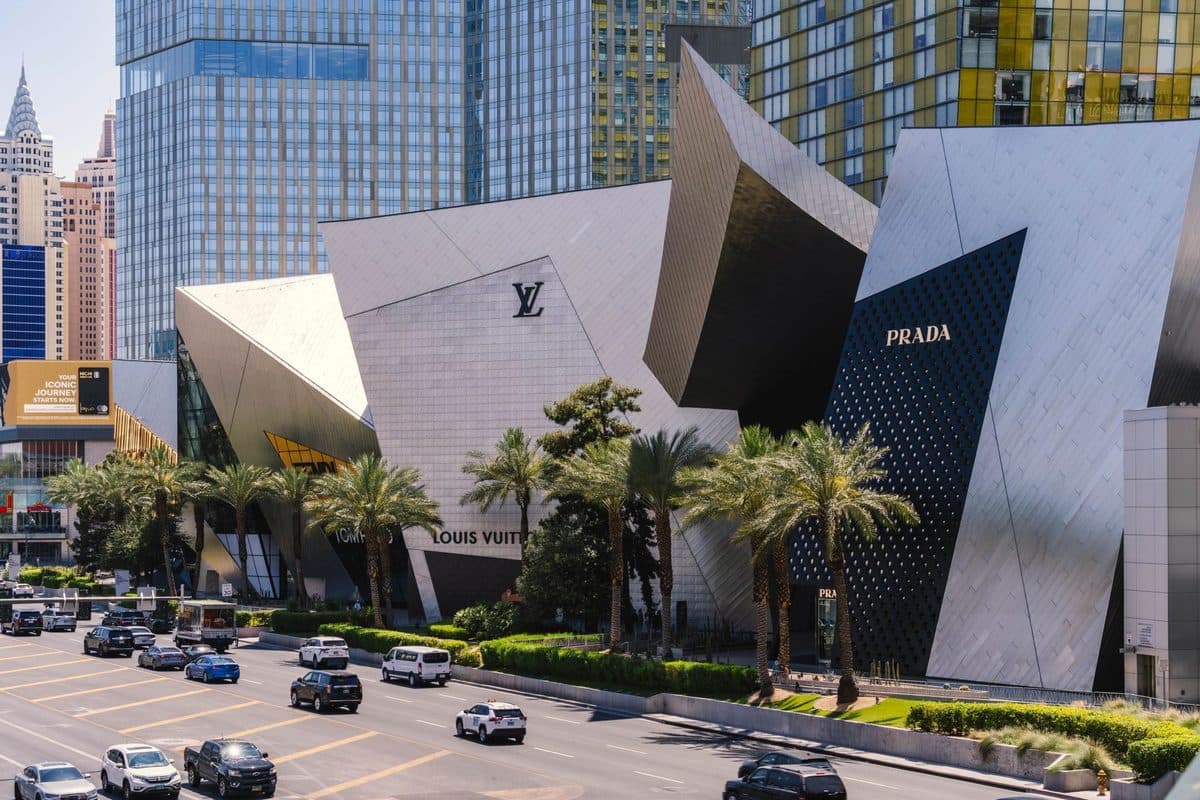
Retail space in Las Vegas currently averages $238.61 per square foot for purchase, with Q1 2026 seeing 65 closed transactions totaling $96.4 million (Source: MDL Group Q1 2026). Prices vary dramatically by corridor — from under $160/SF in North Las Vegas to over $400/SF along the Strip and in Summerlin. Whether you're an owner-user looking to stop paying rent or an investor chasing NNN cash flow in a zero-state-income-tax market, this guide breaks down what retail property actually costs, where to buy, and how to finance it.
Retail Price Per Square Foot by Corridor
Not all Las Vegas retail trades at the same number. The corridor determines your entry price, tenant demand, and exit cap rate. Here's what buyers paid in Q1–Q2 2026:
| Corridor | Approx. Price/SF | Typical Product |
|---|---|---|
| Summerlin (215/Sahara–Charleston) | $300–$425/SF | Anchored pads, inline suites, medical-retail |
| Henderson (Green Valley–Cadence) | $275–$375/SF | Grocery-anchored, neighborhood strip |
| Strip / Paradise | $350–$600+/SF | High-traffic tourist-facing, restaurant pads |
| Chinatown (Spring Mountain Rd) | $200–$300/SF | Multi-tenant strip, food & service |
| Southwest LV (Blue Diamond–Cactus) | $200–$280/SF | New construction pads, fast-casual anchored |
| North Las Vegas (Craig–Ann Rd) | $150–$225/SF | Value-add strip centers, convenience retail |
The citywide average of $238.61/SF masks these swings. A 2,500 SF pad in Summerlin might cost $900,000, while the same footprint in North Las Vegas lists around $400,000 (Source: MDL Group / LoopNet Q1–Q2 2026).
Who's Buying: Owner-Users vs. Investors
Las Vegas retail buyers fall into two camps, each with a different playbook.
Owner-users — restaurants, medical practices, salons, and service businesses — buy to eliminate rent and build equity. They target 1,200–5,000 SF inline or endcap suites in corridors where their customers already live. The SBA 504 program (more below) makes this accessible with just 10% down.
Investors target two product types:
Single-tenant NNN: A freestanding Starbucks, urgent care, or Dollar General pad leased to a credit tenant on a 10–15 year NNN lease. The tenant pays taxes, insurance, and maintenance. The investor collects mailbox income. These trade at tighter cap rates (5.0–6.5%) but require minimal management.
Multi-tenant strip centers: 5–15 unit strips with a mix of food, service, and convenience tenants. Higher cap rates (7.0–8.5%) reflect management intensity and rollover risk, but also value-add upside through lease-up, rent bumps, and repositioning.
A notable Q1 transaction: 625 N. Stephanie St. in Henderson sold for $7.68 million — 53,306 SF at $144/SF — a value-add multi-tenant play in a strong demographic corridor (Source: MDL Group Q1 2026).
Cap Rates and the Nevada Tax Advantage
The market-wide retail cap rate averaged 6.4% across Q1 2026 transactions (Source: MDL Group Q1 2026). But cap rates vary widely by product type and risk profile:
| Product Type | Cap Rate Range |
|---|---|
| Credit NNN (Starbucks, CVS, Chick-fil-A) | 5.0–5.75% |
| NNN (regional/local tenants) | 5.75–6.75% |
| Multi-tenant strip (stabilized) | 6.5–7.5% |
| Value-add strip (vacancy/below-market rents) | 7.5–8.5%+ |
The Nevada edge for 1031 exchange buyers: California investors trading into Las Vegas retail gain an immediate yield boost. Nevada has no state income tax — on a $1 million NNN acquisition yielding 6.0%, that's roughly $3,600–$7,800 in annual state tax savings compared to California's 13.3% rate. Over a 10-year hold, the cumulative advantage compounds significantly. This is why Las Vegas continues to attract 1031 capital from the West Coast (Source: realized1031.com / NRS 363A).
For a deeper look at cap rates across all asset classes, see our Las Vegas CRE Cap Rates 2026 breakdown.
SBA 504 Financing: The Owner-User Advantage
If you're buying retail space to operate your own business, the SBA 504 program is the most powerful tool in your financing stack:
- 10% down (vs. 20–25% conventional)
- 25-year fixed rate on the CDC debenture portion (typically 40% of the project cost)
- Below-market interest rates — SBA 504 debenture rates have historically run 50–150 basis points below conventional commercial mortgage rates
- No balloon payment — full amortization, no refinance surprise at year 5 or 10
How it works: A conventional lender provides 50% of the project cost, the CDC (Certified Development Company) provides 40% via the SBA-backed debenture, and you put down 10%. On a $750,000 retail suite, that's $75,000 down instead of $150,000–$187,500.
The catch: You must occupy at least 51% of the building. But for a restaurant owner, dentist, or service business currently leasing — the math usually favors buying within 18–24 months of occupancy.
The SBA 504 program helped Las Vegas businesses like 123 Goal expand from a single kiosk to multiple owned properties using 10% down acquisition financing (Source: Nevada Business Magazine · Dec 2025).
What the Market Looks Like Right Now
The fundamentals behind retail ownership are strong heading into late 2026:
- Vacancy: 4.5% — tight enough to support rent growth but not so tight that finding a property is impossible (Source: Colliers Q2 2026)
- Rents: $2.12/SF NNN — a record-high average asking rate, which supports valuations for existing owners and creates urgency for owner-users to lock in before further appreciation (Source: Colliers Q2 2026)
- Absorption: 5 consecutive quarters positive — tenants are still expanding into Las Vegas retail, which de-risks both owner-user and investor acquisitions (Source: Colliers Q2 2026)
- Construction: ~1.5M SF under construction — new supply is measured, not speculative, including the Athletics ballpark retail, Hylo Park, and Regal Summerlin Cinema redevelopment (Source: Colliers Q2 2026)
For context on leasing retail space instead of buying, see our corridor-by-corridor lease rate guide.
What to Evaluate Before You Buy
Retail real estate is location-dependent in ways that office and industrial are not. Before you make an offer:
Traffic counts and visibility — corner pads with signage on a major arterial (Flamingo, Sahara, Eastern, Stephanie) command premiums for a reason. A 15% higher price/SF for a visible endcap often pencils better than a cheaper inline unit nobody can find.
Parking ratio — Las Vegas zoning typically requires 4–5 spaces per 1,000 SF for retail. Older properties in the urban core sometimes fall short, which limits restaurant or medical use.
Demographics and rooftops — new master-planned communities like Cadence and Skye Canyon are delivering thousands of rooftops annually. Retail pads serving these growing populations benefit from built-in demand.
Lease roll and tenant quality — for investor acquisitions, check the remaining lease term, rent escalations, and tenant creditworthiness. A NNN property with 3 years remaining trades very differently than one with 12.
Condition and deferred maintenance — roof, HVAC, parking lot, and ADA compliance. In the desert, flat roofs and HVAC systems age faster than national averages. Budget accordingly.
Frequently Asked Questions
What is the average price per square foot for retail space in Las Vegas? Q1 2026 retail sales averaged $238.61 per square foot across 65 transactions totaling $96.4 million. Prices range from roughly $150/SF in North Las Vegas to $400+ per SF in Summerlin and the Strip corridor (Source: MDL Group Q1 2026).
What cap rate can I expect on a Las Vegas retail property? The market-wide average cap rate for retail sales was 6.4% in Q1 2026. NNN single-tenant properties in prime corridors trade at 5.0–6.5%, while value-add multi-tenant strip centers in secondary locations can yield 7.0–8.5% (Source: MDL Group Q1 2026).
Can I buy retail property in Las Vegas with 10% down? Yes. The SBA 504 loan program allows owner-users to purchase commercial real estate with as little as 10% down, a 25-year fixed-rate term, and below-market interest rates. You must occupy at least 51% of the building.
Is Las Vegas retail a good investment in 2026? Fundamentals are strong: 4.5% vacancy, five consecutive quarters of positive net absorption, and record-high asking rents of $2.12/SF NNN (Source: Colliers Q2 2026). Nevada's zero state income tax adds 100–130 basis points of effective yield advantage over California properties.
What's the difference between buying NNN retail and a strip center? A single-tenant NNN property shifts taxes, insurance, and maintenance to the tenant — it's passive income. A multi-tenant strip center requires active management but offers higher cap rates and value-add upside through re-leasing and rent bumps.

Frequently Asked Questions
What is the average price per square foot for retail space in Las Vegas?
Q1 2026 retail sales averaged $238.61 per square foot across 65 transactions totaling $96.4 million. Prices range from roughly $150/SF in North Las Vegas to $400+ per SF in Summerlin and the Strip corridor.
What cap rate can I expect on a Las Vegas retail property?
The market-wide average cap rate for retail sales was 6.4% in Q1 2026. NNN single-tenant properties in prime corridors trade at 5.0–6.5%, while value-add multi-tenant strip centers in secondary locations can yield 7.0–8.5%.
Can I buy retail property in Las Vegas with 10% down?
Yes. The SBA 504 loan program allows owner-users to purchase commercial real estate with as little as 10% down, a 25-year fixed-rate term, and below-market interest rates. You must occupy at least 51% of the building.
Is Las Vegas retail a good investment in 2026?
Fundamentals are strong: 4.5% vacancy, five consecutive quarters of positive net absorption, and record-high asking rents of $2.12/SF NNN. Nevada's zero state income tax adds 100–130 basis points of effective yield advantage over California properties.
What's the difference between buying NNN retail and a strip center?
A single-tenant NNN property shifts taxes, insurance, and maintenance to the tenant — it's passive income. A multi-tenant strip center requires active management but offers higher cap rates and value-add upside through re-leasing and rent bumps.
Looking for space, or a commercial deal?
Tell us the size, use, and submarket. We'll send current availabilities and real quoted rates — including the ones that never hit a public listing site.